

Codex 5.5 or Fable 5? How we choose the right frontier model, build by build.
OpenAI's Codex now runs GPT-5.5; days later Anthropic shipped Claude Fable 5 — two flagship coding models, neither 'best' at everything. From inside OpenAI's Builder Lounge at NY Tech Week, here is the working rule we use to route between Codex 5.5, Fable 5, Claude Opus 4.8, and Gemini on real builds — and why the right choice now changes almost every week. Forward-deployed, so a 20-person company or a global enterprise gets the frontier without standing up its own AI research bench.
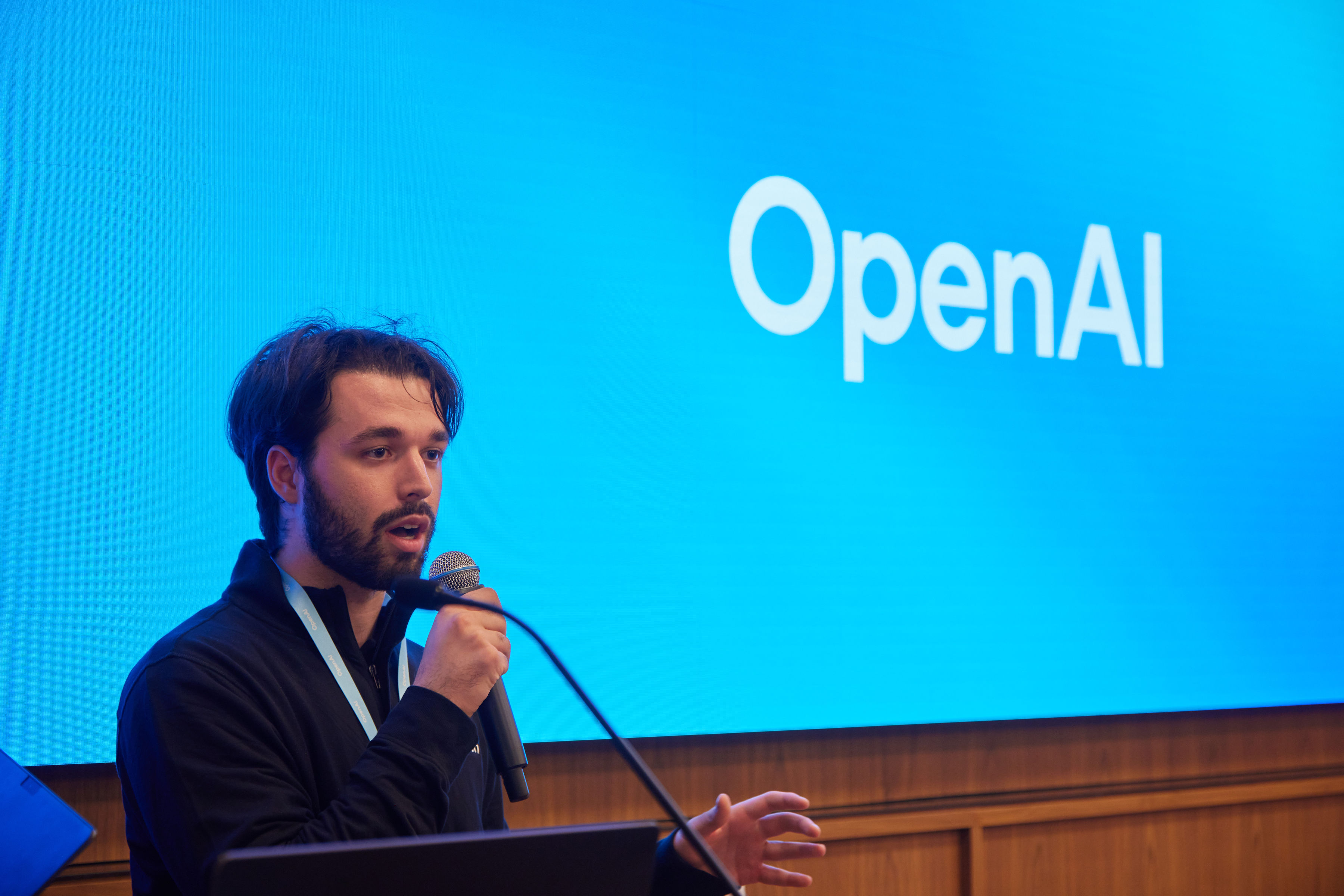
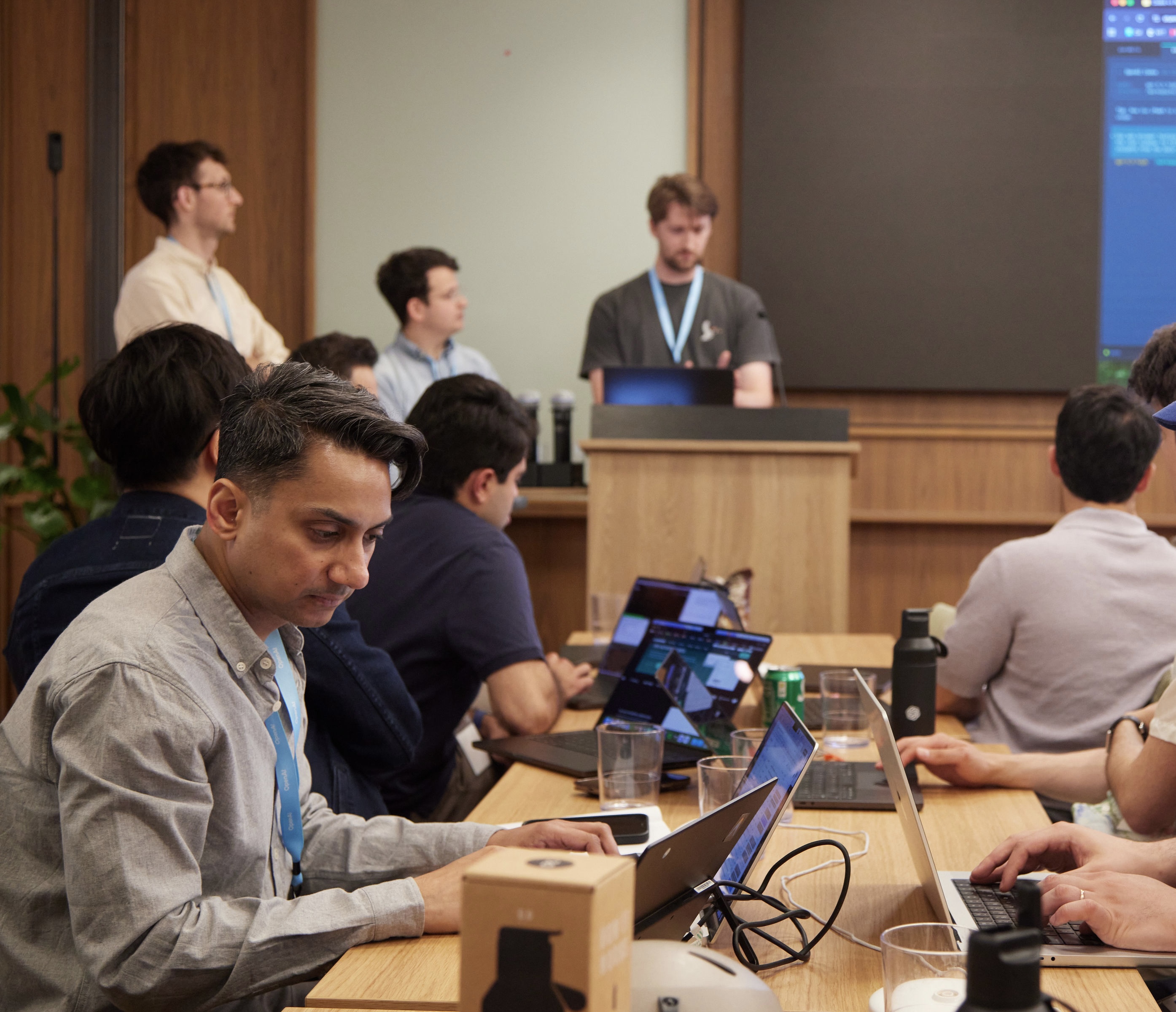
The hard part of enterprise AI is no longer which model is best. It is that the answer changes almost every week — and almost no team is staffed to keep up. The advantage now goes to whoever can test each new frontier model against real work the week it ships, and route the winner into production. For most companies, that is not a hire. It is a partner.
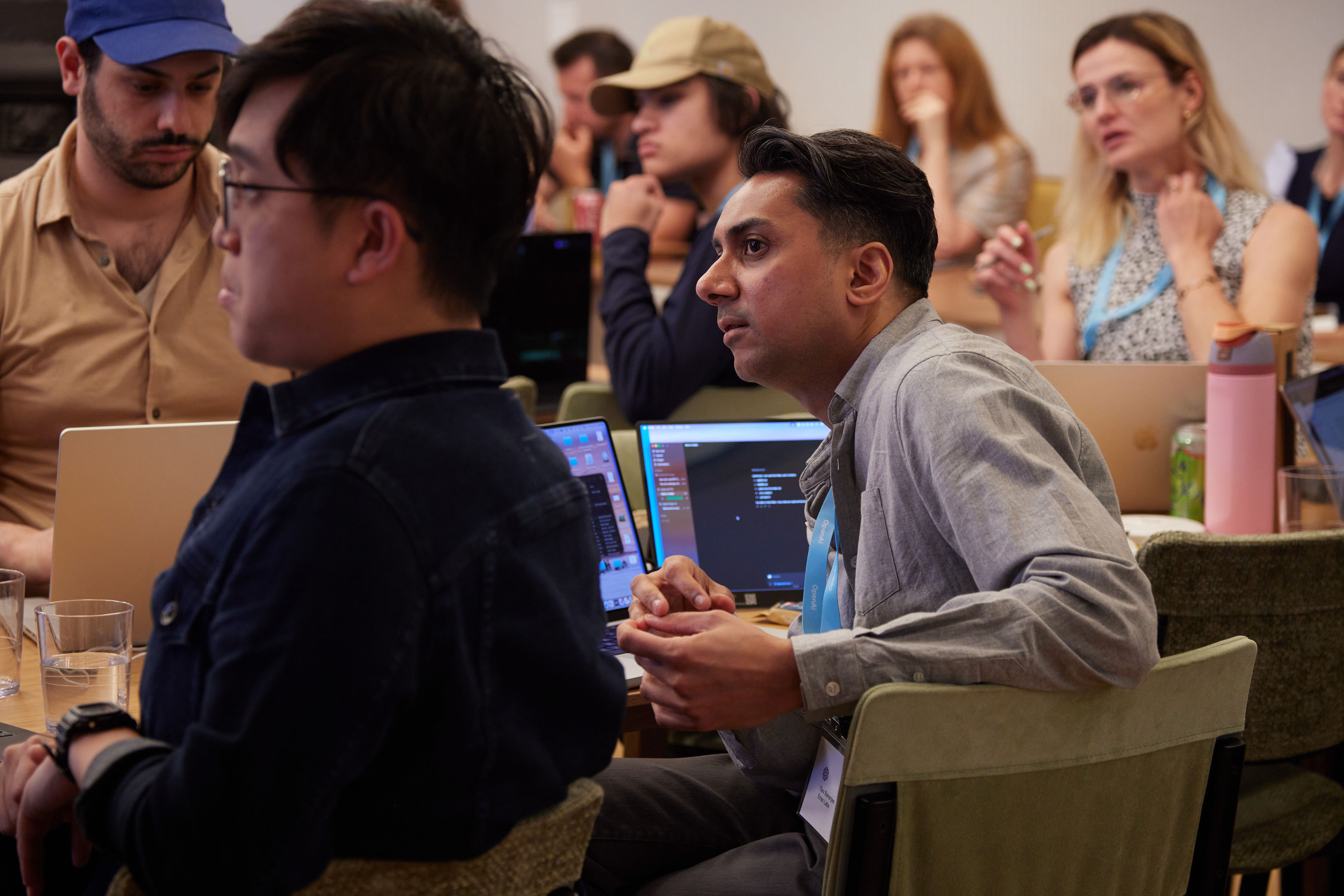
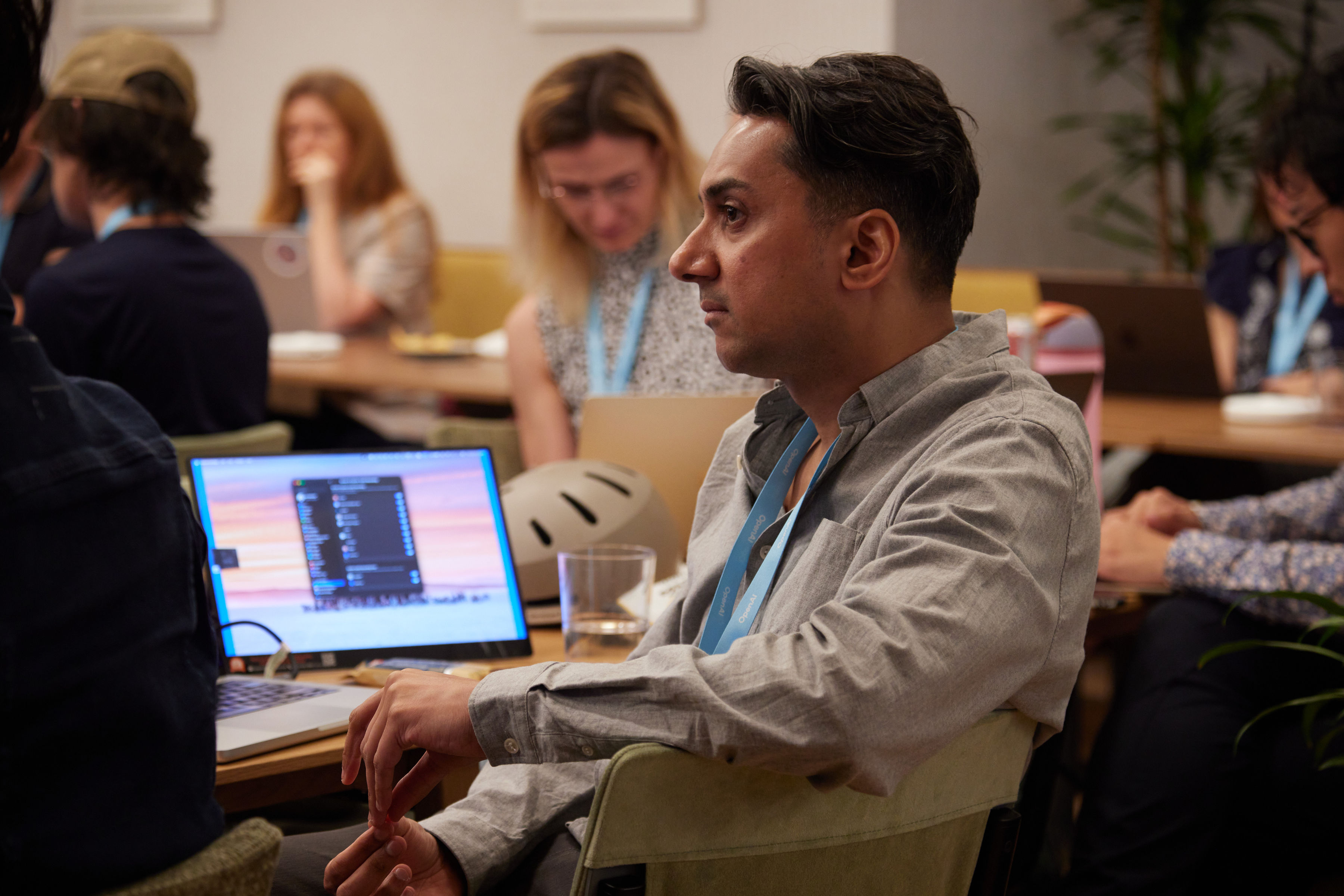
We spent a working afternoon at OpenAI's Builder Lounge during NY Tech Week, at their SoHo office — building with Codex alongside the engineers who ship it, with unlimited model access and an open AMA. The point of the room was not the keynote; it was the keyboards. Founders and engineers stress-testing the newest model against real workloads, in real time. That is the habit the whole business now runs on: when a model ships, we are already playing with it.
The frontier ships on a weekly cadence now
Count the last six weeks. Claude Opus 4.8 landed May 28. GPT-5.5 became the model powering Codex. Google shipped Gemini 3.5 Flash at I/O. And today, Anthropic released Claude Fable 5 — its strongest publicly available model, leading the field on agentic coding (SWE-Bench Pro 80.3%) and knowledge work (GDPval-AA 1932), with a safety-router design that quietly hands sensitive queries back to Opus 4.8. Four serious releases in six weeks. By the time a team finishes evaluating one, the next is out.
| Model | SWE-Bench Pro | Knowledge work (GDPval-AA) | Price /M tokens | What it's best at |
|---|---|---|---|---|
| Claude Fable 5 | 80.3% | 1932 | $10 / $50 | The hardest, long-horizon coding and knowledge work; shipped today. |
| Claude Opus 4.8 | 69.2% | 1890 | $5 / $25 | The honest, cheaper default; most reliable about its own failures. |
| GPT-5.5 (Codex) | 58.6% | 1769 | $5 / $30 | Sustained terminal sessions and GitHub-native work. |
| Gemini 3.1 Pro / 3.5 Flash | 54.2% | 1314 | varies | Google-ecosystem fit and roughly 4x faster, cheaper throughput. |
Source: Anthropic's Fable 5 benchmark table, June 9, 2026. Fable 5's published cybersecurity and biology figures belong to the gated Mythos 5; the deployable Fable 5 falls back to Opus 4.8 on those by design.
Read the table and the trap is obvious: there is no single “best” model anymore. Fable 5 leads on hard, long-horizon coding; Opus 4.8 is the honest, cheaper default; GPT-5.5 in Codex owns sustained terminal work; Gemini 3.5 Flash is the speed-and-cost play. Standardize on one and you overpay on the work it was not built for — and you are wrong again the week the leaderboard moves.
Why this is an opportunity, not a problem
For a 20-person company, evaluating four frontier models a month is impossible — there is no spare engineer to benchmark Fable 5 against last week's stack. For a large enterprise it is slower, not faster: a committee, a procurement cycle, and a model that is two generations old by the time it clears review. Either way the cost is the same — running last month's model on this month's problems, or betting the roadmap on a single vendor. The companies pulling ahead are not the ones with the biggest AI teams; they are the ones who have made frontier testing somebody's standing job.
That is the whole opening for a forward-deployed studio. We do the part that does not scale inside one company: we live in these rooms, we play with each model the week it ships, and we already know — from real workloads, not press releases — which one to reach for. For regulated teams that testing has to be auditable too, which is its own reason to have an operator rather than a science project. But the need is universal: the frontier now moves faster than any single team can track.
The Enso take: we test the frontier so you can ship on it
This is the work we do, and it is why we are in the room. We are a forward-deployed, build-and-operate studio — for a Fortune 500 manufacturer whose scientists trust only intelligence they can inspect, for Heller's pharma AI Center of Excellence shipping compliant work from day one, and in our own Enso Trading Terminal, where we run frontier models against live markets. Every one of those started the same way: playing with the newest models until we knew exactly which to trust with which job.
We do not hand a client a model recommendation that is stale in a week. We stand up and operate a governed routing layer — managed agents — that picks the right model per task and swaps in a new one when it earns its place. The default we run by:
| The job | We reach for | Why |
|---|---|---|
| Long builds, migrations, sustained terminal work | Fable 5 or GPT-5.5 (Codex) | Long-horizon execution that runs for an hour without losing the thread. |
| Hard reasoning, ambiguous judgment, large codebases | Fable 5 or Opus 4.8 | Strongest judgment under ambiguity; Fable 5 when the build is genuinely hard. |
| Anything on sensitive or production data | Opus 4.8 | The most honest about its own failures; the conservative, cheaper default. |
| High-volume, latency- or cost-sensitive work | Gemini 3.5 Flash or Opus 4.8 | Roughly 4x faster, cheaper, where the judgment bar is lower. |
| One-off scripts, glue, throwaway tooling | Either | Route on cost and whichever terminal is already open. |
The routing rule is the deliverable; the testing habit behind it is the moat. When Fable 5 shipped this morning, our clients did not have to do anything — we were already benchmarking it against their workloads by lunch.
What to do about it
Stop standardizing on one model. The best model is now a per-job, per-week decision. Build a routing habit — match the model to the task — instead of a vendor loyalty you will regret the next time the leaderboard moves.
Make frontier testing somebody's standing job. Whether it is an internal pod or a forward-deployed partner, someone has to be playing with each release the week it ships. The cost of not doing it is invisible until you are two generations behind.
Measure cost per shipped result, not per token. A pricier model that finishes in one pass can be cheaper than a cheap one that needs three. Track dollars-per-completed-task across models, not sticker price.
Buy the operator, not the model. For most companies the answer is not a bigger AI team — it is a forward-deployed studio that tests, routes, and operates the frontier for you, and keeps the system current as the models change underneath it.
A new frontier model shipped this morning. Another will ship next week, and the week after that. The companies that win the next phase are not the ones who pick the right model today — they are the ones who never have to pick alone. That is the room we live in, and the service we sell.
This is the core of our AI transformation services: a governed, forward-deployed routing layer that picks the right model per task and swaps in a new one when it earns its place — operated for you. If your team is standardizing on one model, or has no one testing the frontier the week it ships, get in touch.
Powered by Enso Labs
Frequently Asked Questions
What is Claude Fable 5?
Claude Fable 5 (API id claude-fable-5) is Anthropic's strongest generally available model, launched June 9, 2026. It leads the field on agentic coding (SWE-Bench Pro 80.3%) and knowledge work (GDPval-AA 1932). It ships with a safety-router design: classifiers route cybersecurity, biology, and model-distillation queries to Claude Opus 4.8, and the unguarded version (Mythos 5) is gated to vetted partners. It runs $10/$50 per million tokens, double Opus 4.8.
How often are new frontier AI models released in 2026?
Often enough that 'which model is best' changes almost weekly. In one six-week span in 2026, Anthropic shipped Claude Opus 4.8 (May 28) and Claude Fable 5 (June 9), OpenAI's GPT-5.5 began powering Codex, and Google shipped Gemini 3.5 Flash at I/O. Each leads on different work, so the right choice is a per-job decision that has to be re-tested as new models land.
What is a forward-deployed AI studio?
A forward-deployed studio embeds with a client to build and operate AI systems in production rather than handing over a strategy deck. For frontier models specifically, it means continuously testing each new release against the client's real workloads, routing the best model to each job, and keeping the system current as the leaderboard moves — so the client gets frontier capability without staffing its own AI research team.
Should a company standardize on a single AI model?
Usually no. As of 2026 no single model leads on every task — one is strongest on long-horizon coding, another is the honest default on sensitive data, another is the speed-and-cost option. Standardizing on one means overpaying on the work it was not built for and falling behind when a better model ships. A routing approach — matching the model to the task and re-testing as new models arrive — beats vendor loyalty.
Want to scope an engagement around this?