Enso Labs Insights is the studio’s editorial archive — essays from inside live engagements about what survives contact with production, what fails on the way there, and the operating principles behind the Strategy-to-Ship Framework.
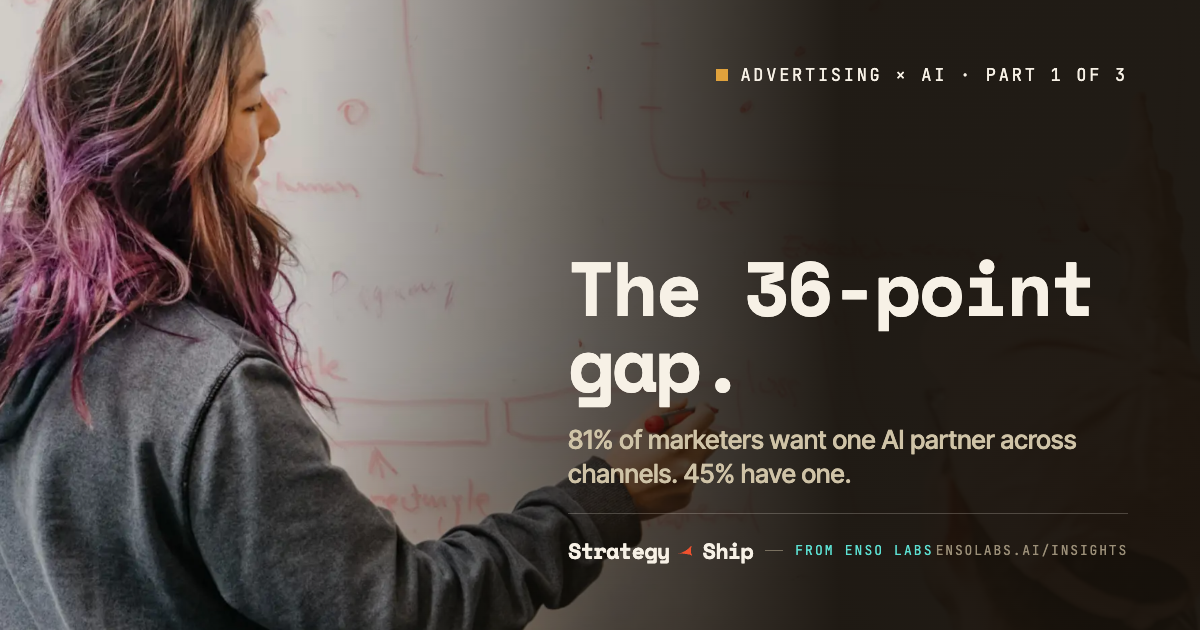
81% of marketers want one AI partner across creative, media, commerce and earned. 45% have one. What closes the gap is not another tool per channel. It is a managed agent that carries the brief, the journey map, the measurement plan and the segmentation across every channel. Enso Labs builds that harness: the strategic conduit between your channels, reporting every reallocated dollar in media dollars, channels, days and leads.
Most AI strategy decks end at the architecture diagram. This one starts there. Four companies. Four deployment patterns. The actual code, models, and engineering decisions that determine whether an AI system survives contact with production.
Every Forward Deployed Strategist works with Anthropic, OpenAI, and Perplexity — but most practitioners treat them as interchangeable model vendors. They are not. Each lab has a distinct theory of production deployment. Here is why it is the architecture decision that determines whether your deployment survives.
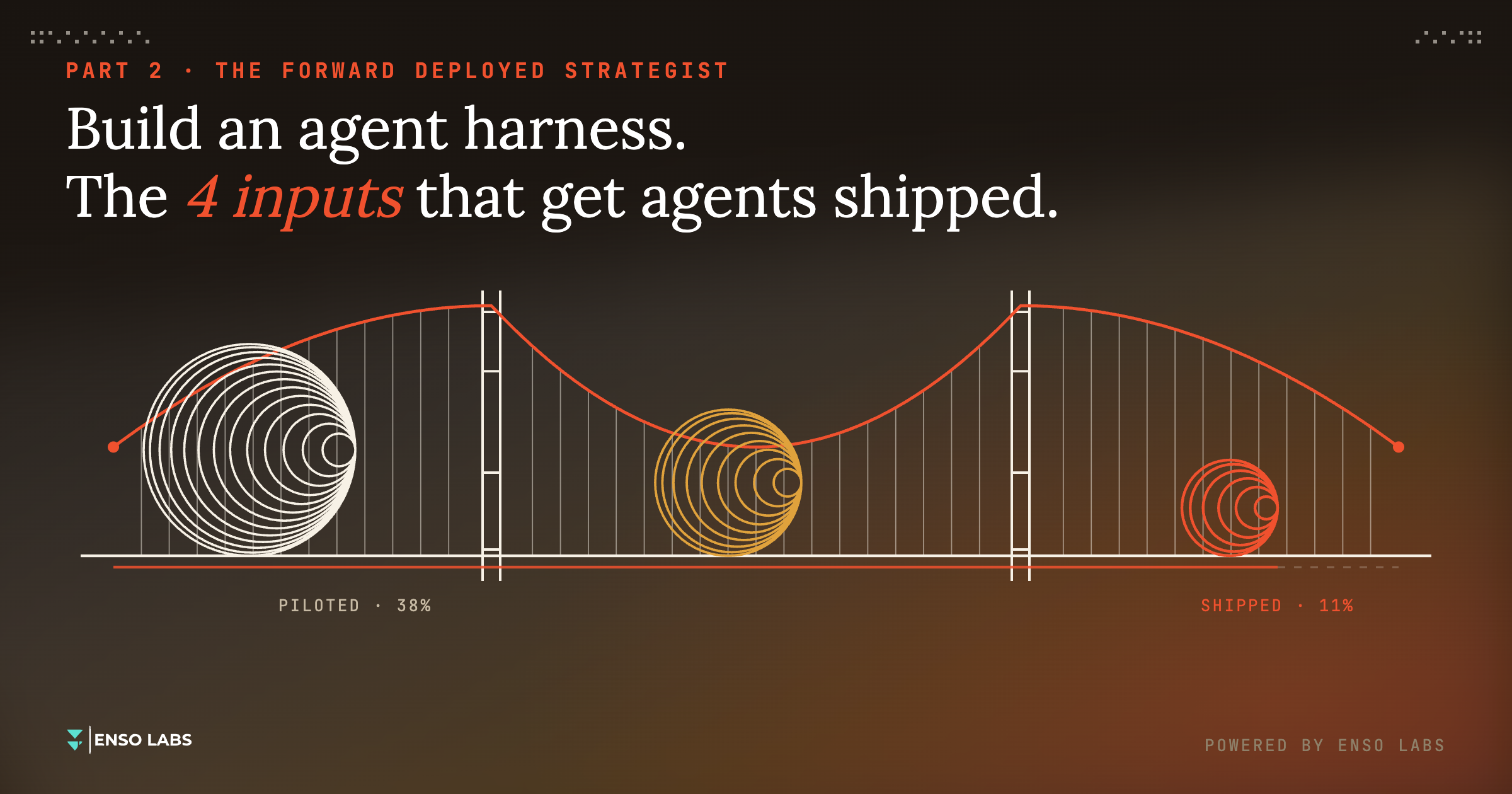
Only 11% of organizations have an AI agent running in production. The gap is not engineering — it is four inputs nobody wrote down before the build started. Here is the checklist, and what each input becomes inside the system.
The hottest role in AI is the Forward Deployed Engineer. But the scarce half of the job isn't the engineering — it's the forward: reading a business, defining what the system is for, and getting an organization to adopt it. That is the deployment strategist seat, and it comes straight from the Madison Avenue strategy disciplines: brand, digital, CX, and data.
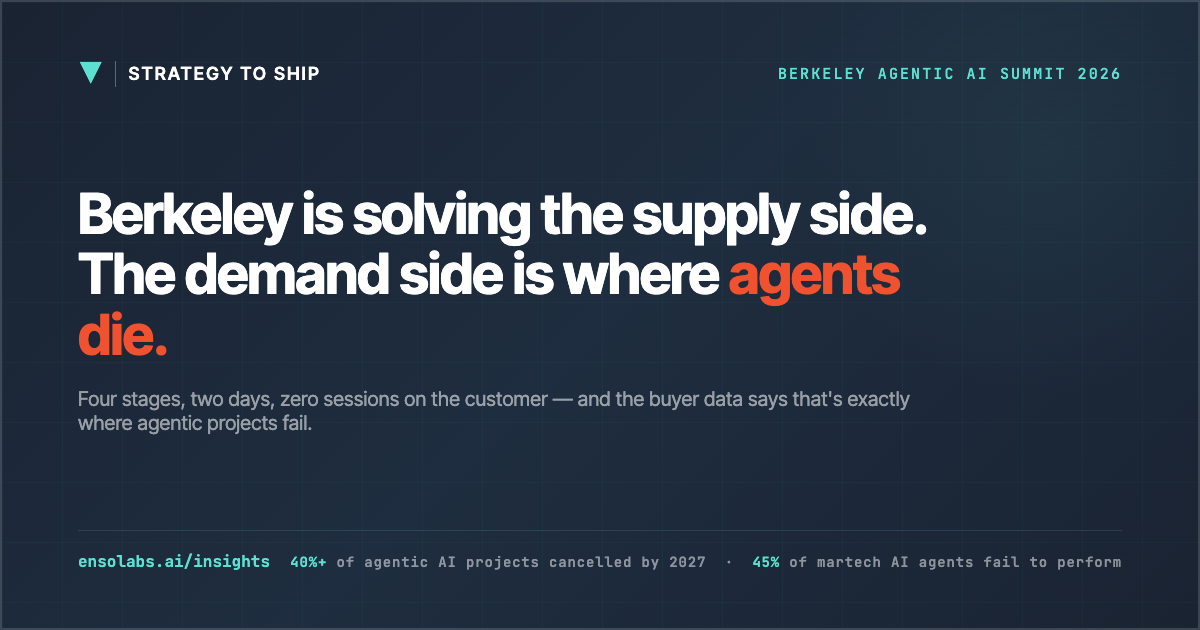
Across four stages and two days at Berkeley's Agentic AI Summit, not one session title names the customer. The buyer data says that is exactly where agentic projects fail — and it is a segmentation problem, not a model problem.
At AGI Summit 2026, Crunchbase's CPO and a Blitzscaling Ventures GP gave two independent talks that converged on one map: when code and models are commodities, the durable edge is proprietary data, community, workflow embedding, distribution, and network effects — everything the model isn't. Field notes from the Palace of Fine Arts, with the H1 2026 funding data underneath.
AGI Summit made one thing clear: the market has moved past demos. Ahead of Berkeley's Agentic AI Summit on August 1–2, we're opening production-gap reviews for teams shipping agentic AI.
We're now a Perplexity Computer Implementation Partner — helping teams onboard, integrate, and get real value out of Perplexity Computer, with a senior team that builds, not just advises.

Anthropic added dreaming, outcomes, and multiagent orchestration to Claude Managed Agents. Together they relocate the hard part of building an agent from writing the loop to defining what 'good' looks like — which is exactly the Strategy-to-Ship work we do.
OpenAI's Codex now runs GPT-5.5; days later Anthropic shipped Claude Fable 5 — two flagship coding models, neither 'best' at everything. From inside OpenAI's Builder Lounge at NY Tech Week, here is the working rule we use to route between Codex 5.5, Fable 5, Claude Opus 4.8, and Gemini on real builds — and why the right choice now changes almost every week. Forward-deployed, so a 20-person company or a global enterprise gets the frontier without standing up its own AI research bench.
Forty-eight hours after Google DeepMind shipped Gemini Omni, Antigravity 2.0, and the new Managed Agents API at I/O 2026, Cerebral Valley convened 150-plus builders at SHACK15 in San Francisco. I was in the room as a Google partner — not a competitor — to talk to builders, observe the new stack under load, and feature the work that will matter twelve months from now. Part 1 of a two-part series on Google I/O 2026.
The Google I/O 2026 keynote announced Gemini Omni, Antigravity 2.0, the Managed Agents API, and Gemini 3.5 Flash. But the keynote is where the marketing lives. The after-hours is where the strategy gets decided. Two nights in San Francisco — Google for Startups × DeepMind on Tuesday, Cerebral Valley × DeepMind at Corgi Cafe on Friday. Part 2 of a two-part series.
Three days after Notion unveiled Workers, MCP, and an Agent SDK, we were at their first hackathon in San Francisco — building a career intelligence agent that anyone can fork and deploy today.
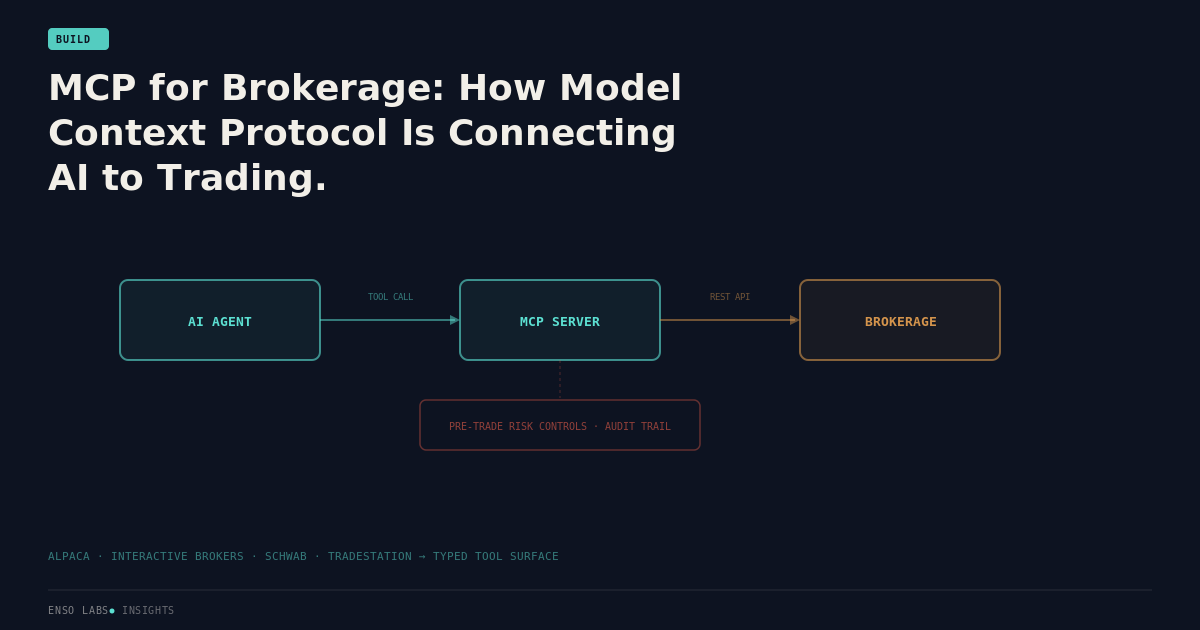
Every brokerage API — Alpaca, Interactive Brokers, Schwab, TradeStation — is becoming an MCP server. This is the integration pattern that makes autonomous financial AI agents practical.
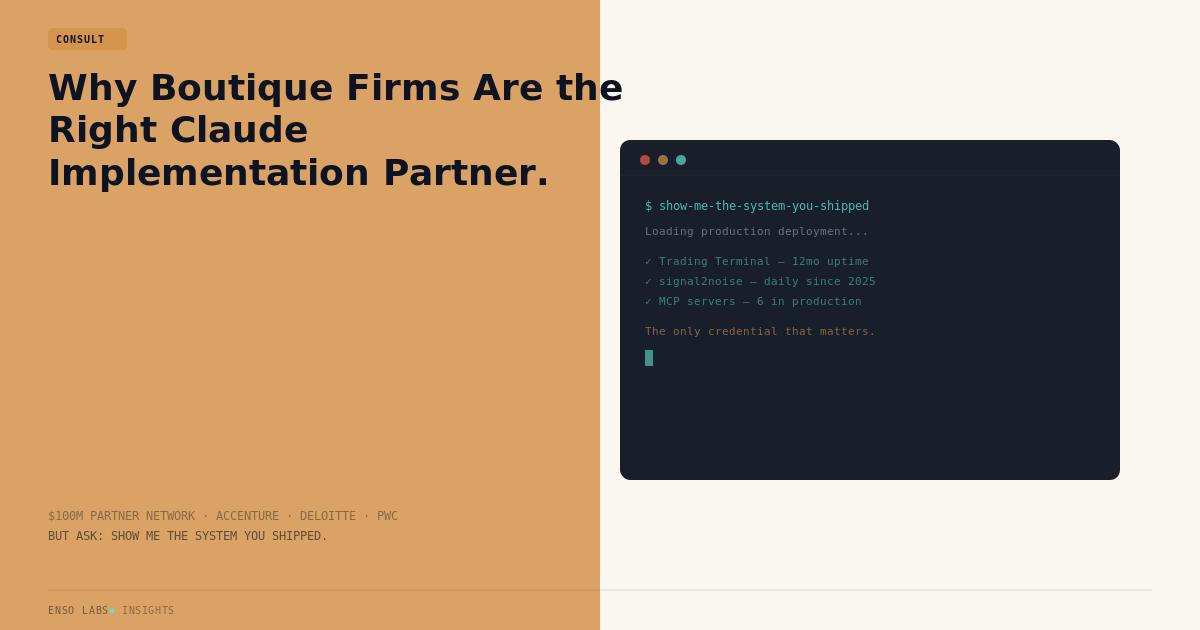
Anthropic launched a $100M Claude Partner Network. Accenture, Deloitte, and PwC are in. But for production agentic systems, the structural advantages belong to boutique operators who build what they advise.
Today Anthropic announced pre-built AI agents for banking and trading — pitchbook builders, credit memo drafters, statement auditors. Enso Labs has been shipping production financial agents since 2025. Here is what this means for the industry and why early movers have a structural advantage.
The gap between a beautiful slide and a running system is where most enterprise AI initiatives quietly die. Here's the autopsy from fifteen years inside the room.
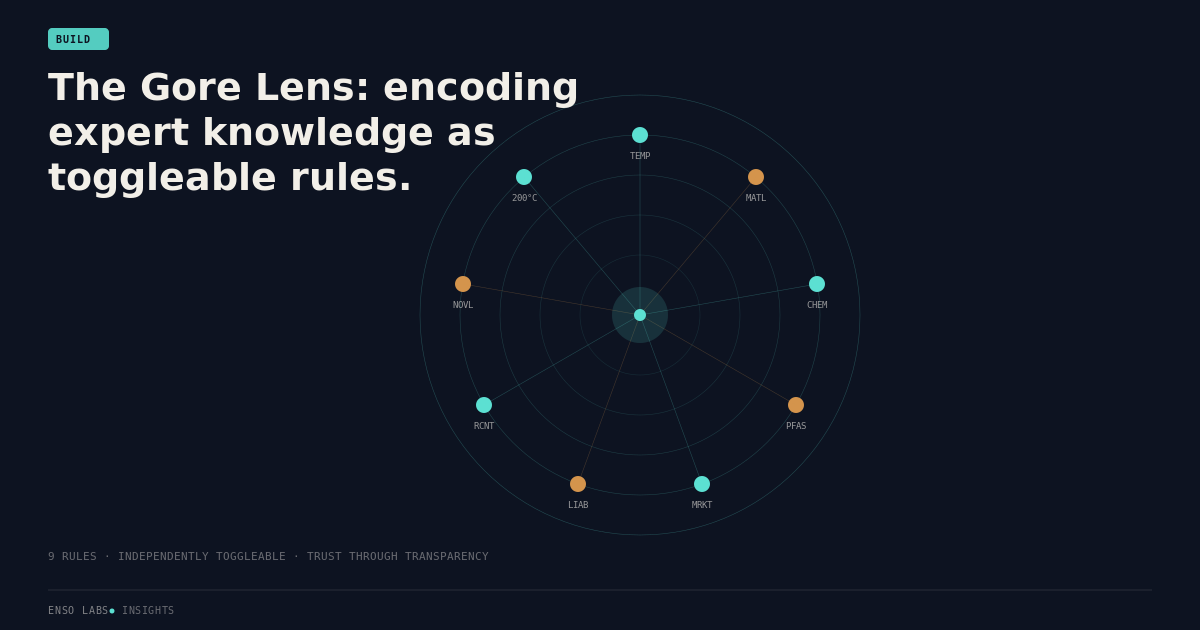
A scientist will never trust a black-box relevance score. Here's how we built a 9-rule expert lens that scientists could reason about — and turn off — one rule at a time.
Every legacy SaaS connector — Salesforce, Slack, Notion, Looker — gets a second life as an MCP server. The companies that ship MCP first will own the agent-native enterprise.
Teams burn months optimizing chunk sizes, hybrid retrieval, and reranker stacks. Then they ship — and discover they never had a reliable way to know if the answer was right.
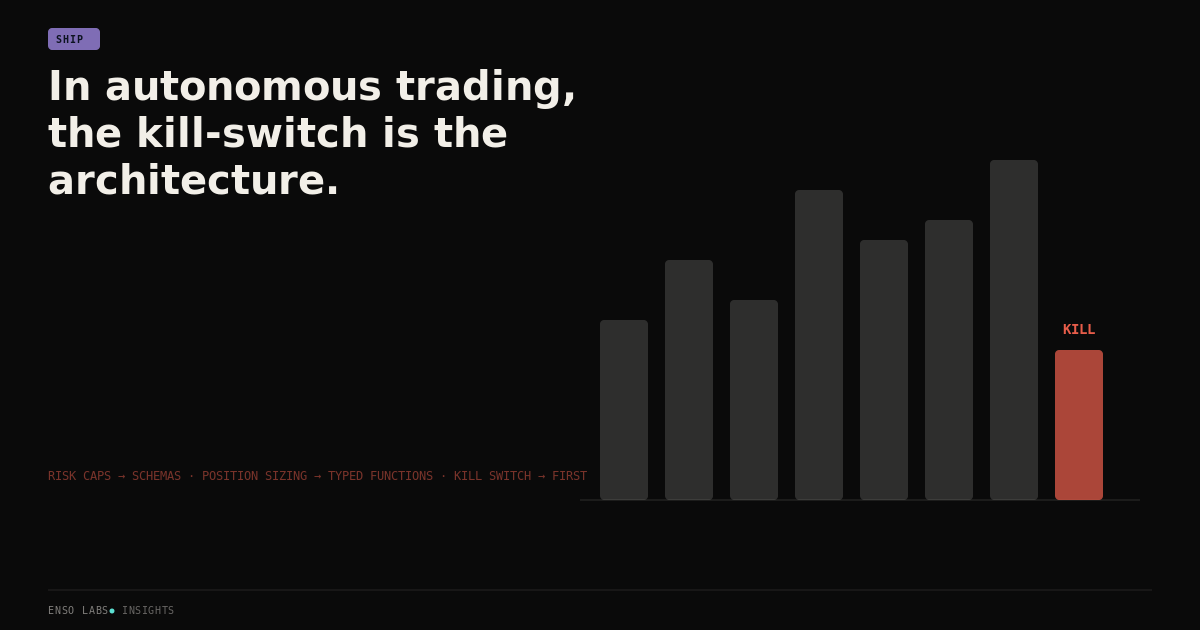
The Trading Terminal runs unattended. That is only possible because the risk caps, position sizing, and shut-off logic were designed before the alpha logic — not after.
Pharma agencies cannot move fast and break things. Medical, Legal, and Regulatory review is non-negotiable. Here's how we built a CoE that compresses launches from three months to two weeks anyway.
Unusual flow is a hypothesis, not a trade. The Options Lab is built to surface hypotheses, force the human to vet them, and only then route to execution.
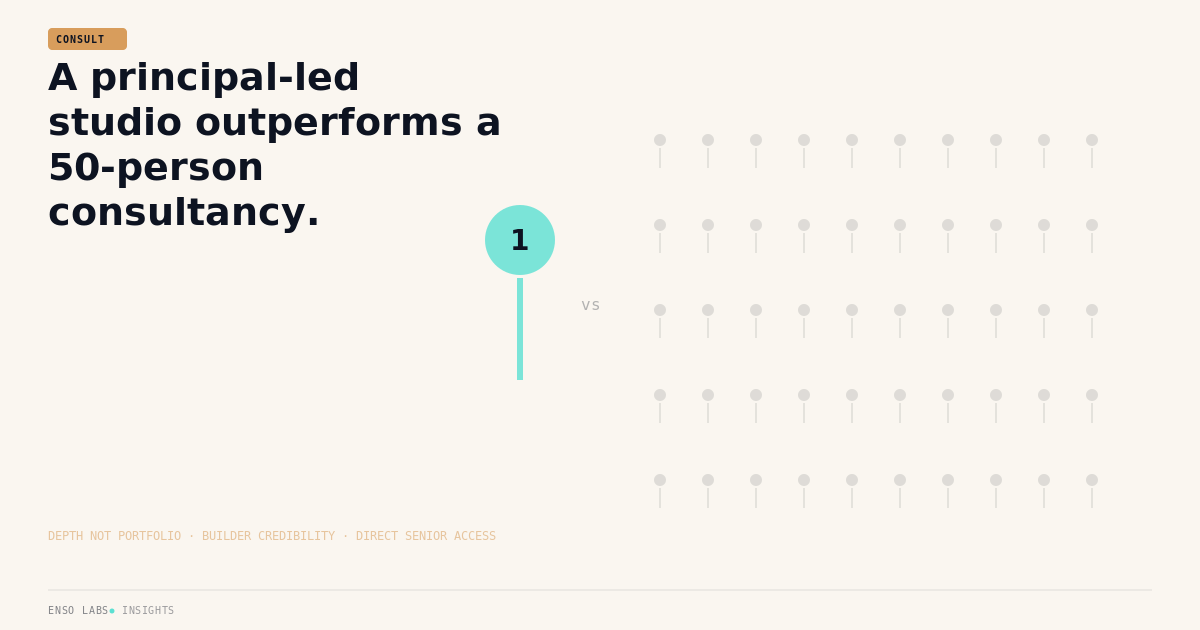
Counterintuitive — and structural, not heroic. Six things change when the advisor and the build team work as one unit.
Enso Labs Insights is the editorial archive of Enso Labs, a principal-led AI managed-services studio in New York City founded by Sav Banerjee. It publishes technical and strategic essays on AI transformation, agentic systems, and financial AI — written from inside live production engagements.
Strategy to Ship is the news-intelligence and publishing engine of Enso Labs — daily AI market intelligence, scored and curated, published on the Enso Labs Insights page. It turns the signals that matter for enterprise AI into field notes for Fortune 500 leaders and builders.
Enso Labs publishes new essays several times a month, plus a daily Live Intelligence feed. Recent coverage includes Google I/O 2026, the Perplexity Implementation Partners Program, Claude Managed Agents, and frontier-model routing, spanning AI transformation, agentic systems, MCP, RAG, and financial AI.
Get in touch at https://ensolabs.ai/contact or email sav@ensolabs.ai. Typical entry points are a two-week AI audit, a twelve-week pilot-to-production build, or an embedded AI operator retainer. Every engagement is led by a senior advisor who also builds.
One essay every two weeks. No newsletter blast, no growth-hacked subject lines — just notes from the work.