
Google I/O After-Hours: Two Nights With Google DeepMind and the Strategic Signal Behind the Demos.
The Google I/O 2026 keynote announced Gemini Omni, Antigravity 2.0, the Managed Agents API, and Gemini 3.5 Flash. But the keynote is where the marketing lives. The after-hours is where the strategy gets decided. Two nights in San Francisco — Google for Startups × DeepMind on Tuesday, Cerebral Valley × DeepMind at Corgi Cafe on Friday. Part 2 of a two-part series.
The Google I/O 2026 keynote announced Gemini Omni, Antigravity 2.0, the Managed Agents API, and Gemini 3.5 Flash — a coherent stack for building production AI agents. But the keynote is where the marketing lives. The after-hours is where the strategy gets decided, and the after-hours is the room Enso Labs reports from.
Over the same week, I attended two of those rooms — the official Google for Startups × Google DeepMind reception on Tuesday May 19, and the Cerebral Valley × DeepMind closeout at Corgi Cafe on Friday May 22. Two nights, two crowds, two different signals from the same launch. Part 2 of a two-part series on Google I/O 2026 — Part 1 covers the Cerebral Valley × Google I/O Hackathon featuring 3rd-place winner Yves Hughes →.
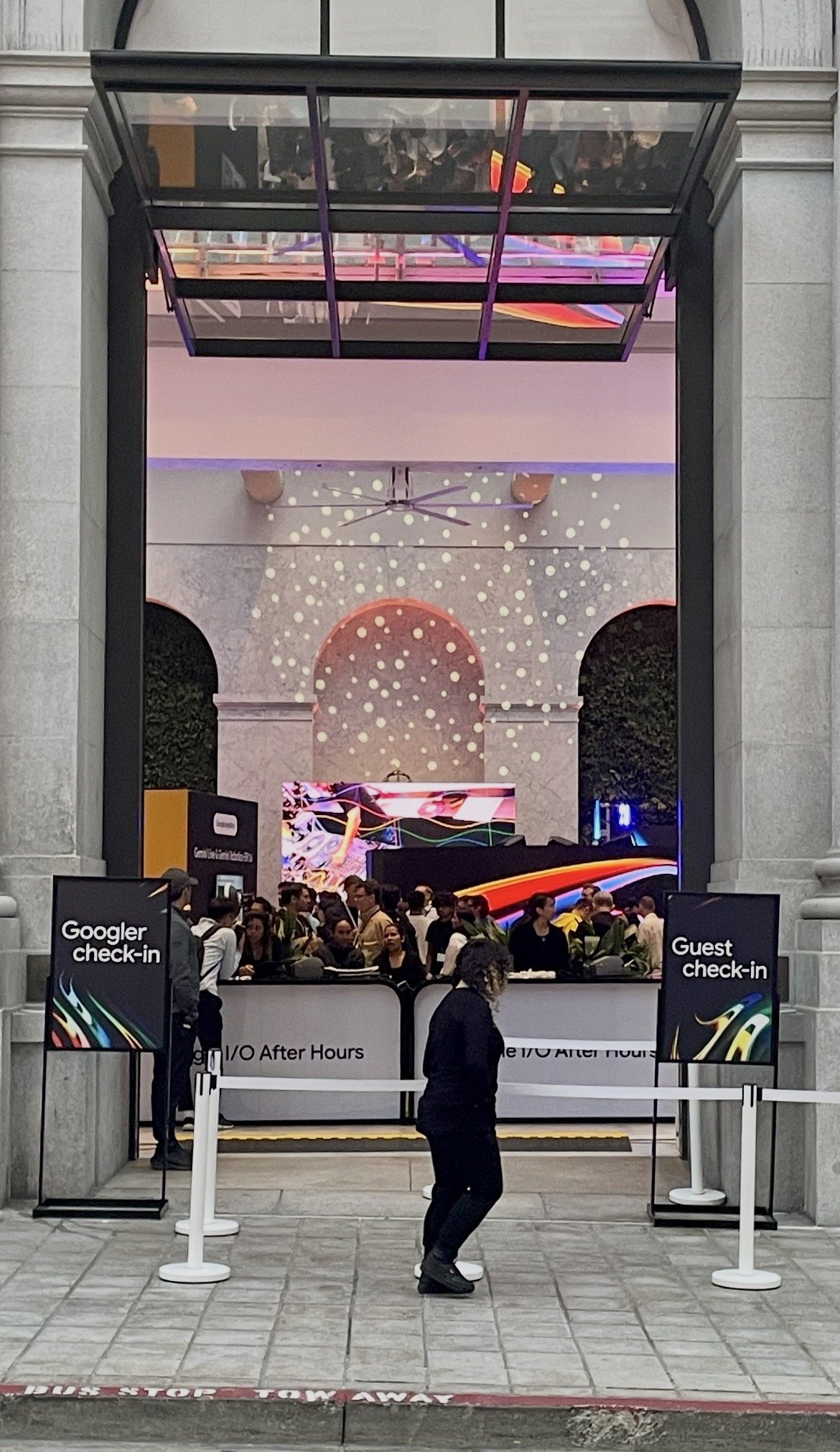
Night One: Google for Startups × Google DeepMind, Tuesday May 19
The official Tuesday reception was the largest of the I/O week. The crowd was a curated mix of founders, investors, and Googlers, brought together by Google for Startups in partnership with the Google DeepMind team. The agenda was deceptively simple: ambient music, conversation, and walk-up demos of the products that had landed in the keynote earlier that day.
The product booths told the actual story Google wanted to be told. Pomelli — Google Labs' AI brand-builder, newly upgraded with Gemini 3.5 Flash and deeper Antigravity 2.0 integration — was running brand books and full websites end-to-end in front of the audience. Stitch — Google's real-time AI design tool now built on a streaming generation model with multiplayer canvas editing — was being demoed continuously by the team that built it. Gemini Live and Gemini Robotics ER 1.5 had a third station for the embodied-AI conversations.
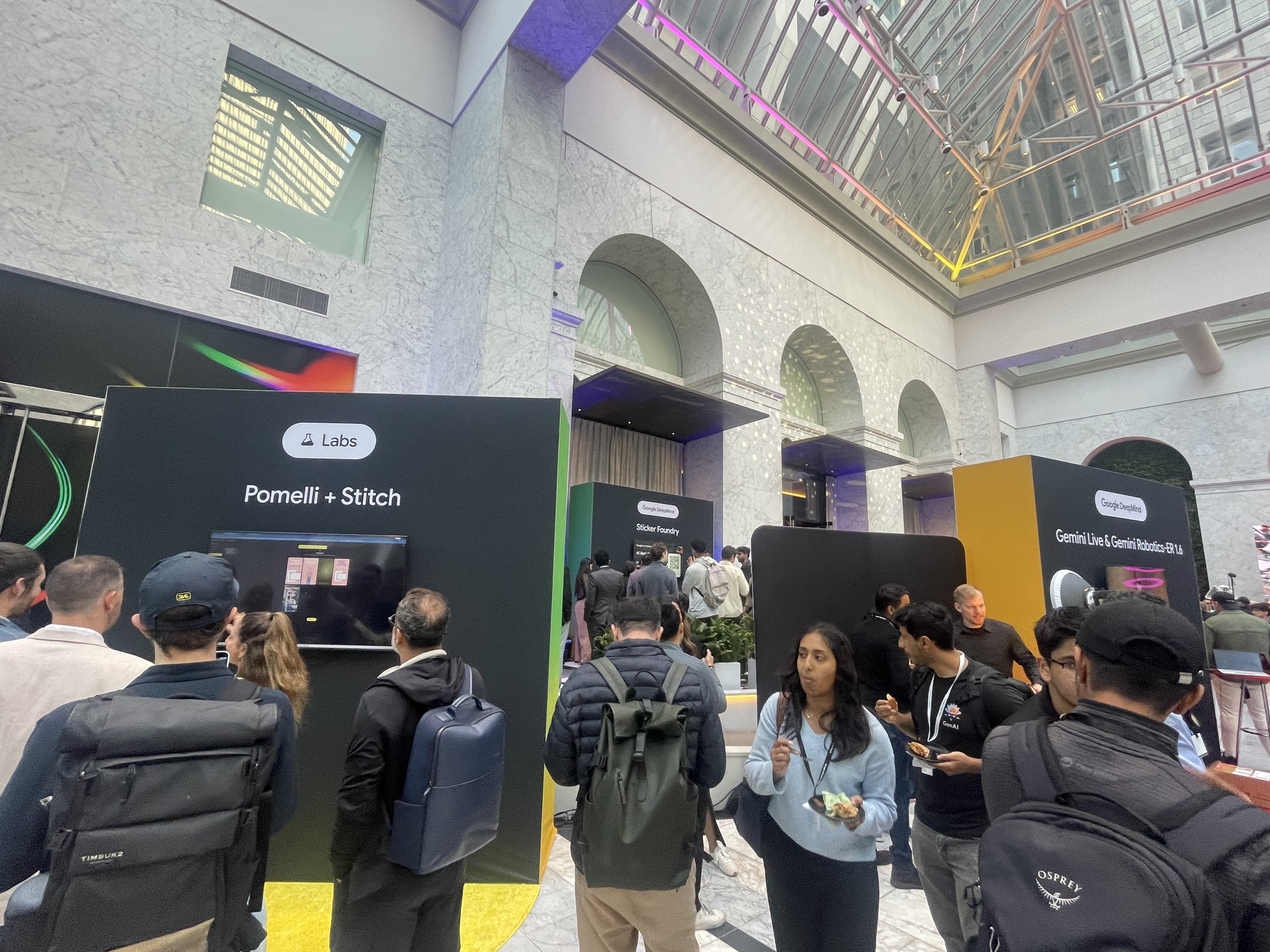
What got the most floor time in conversation was not Pomelli, not Stitch, and not the robotics work. It was Antigravity 2.0 and Managed Agents. The product launches that read as "developer tooling" on the slides read very differently in a room full of founders looking at their cap tables. The implication: Google has now shipped the harness layer that historically separated platform companies from product companies. Every founder I talked to was working through the same recalculation — if Managed Agents costs less than custom infrastructure and replaces six weeks of platform engineering, where does our differentiation move next?
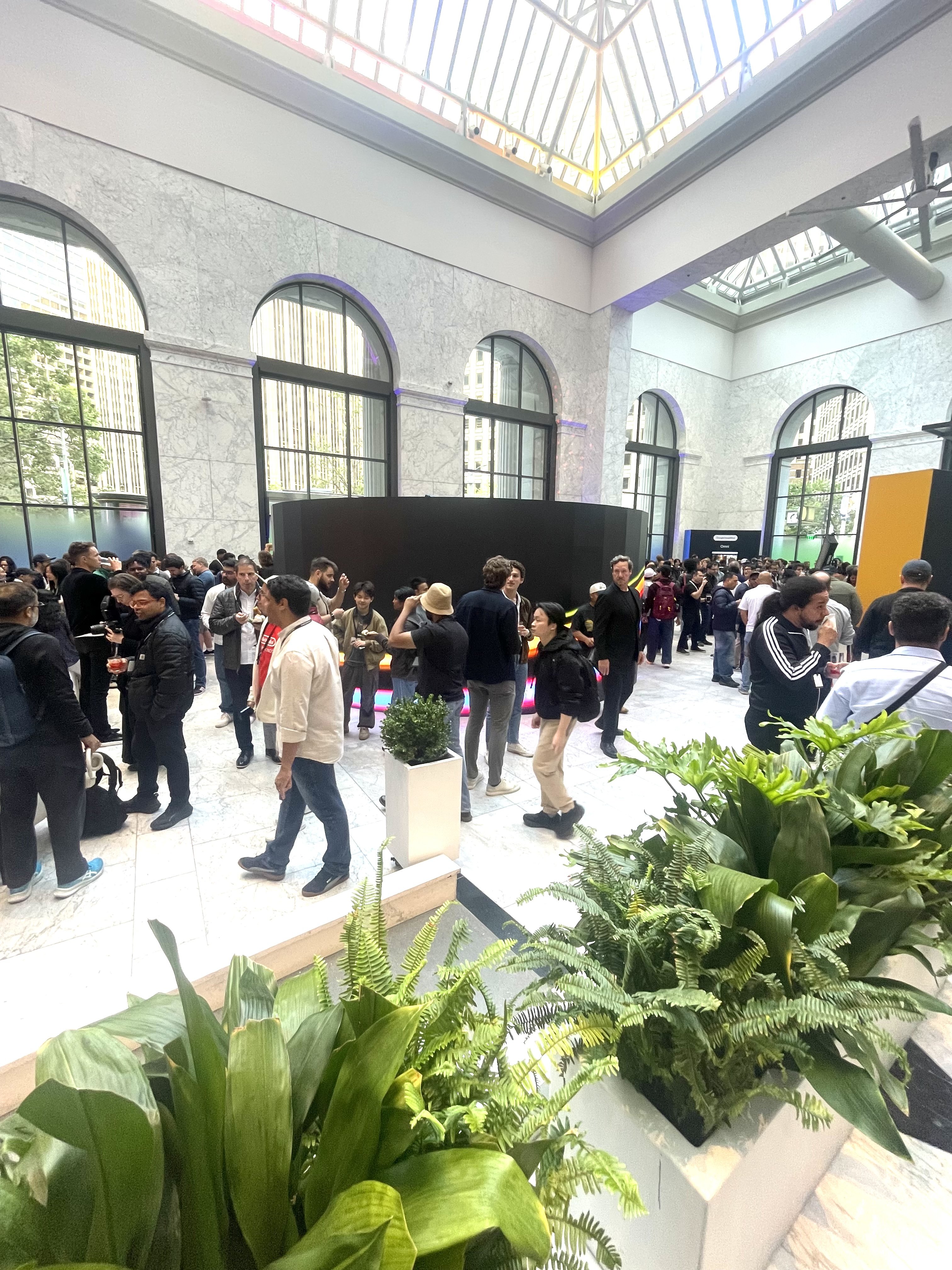
Night Two: Cerebral Valley × Google DeepMind at Corgi Cafe, Friday May 22
By Friday evening the I/O launch energy had compressed. The Corgi Cafe gathering was hosted by Cerebral Valley with the Google DeepMind team — smaller, more technical, more research-adjacent. Where the Tuesday reception was about the product launches, the Friday closeout was about what comes next.
The conversations were noticeably more candid. DeepMind researchers were not in keynote mode. They were in debrief mode. The launches that had read as polished on Monday were now being discussed with the actual rough edges named — where Omni's physics simulation still degrades, where Antigravity 2.0's manager-agent loop still over-orchestrates simple tasks, where the Managed Agents harness performs differently than the live demos suggested.
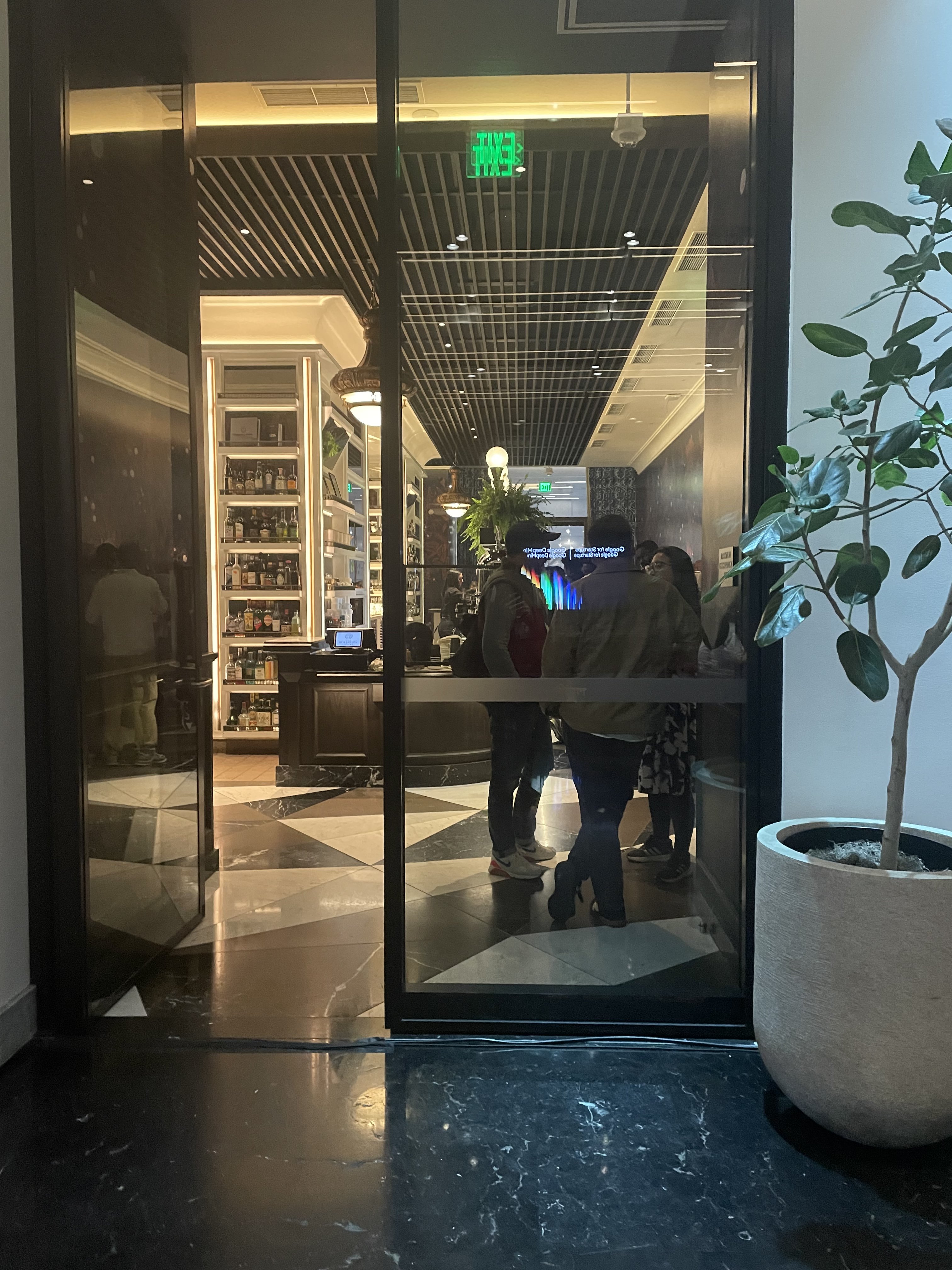
The candor matters. If you only read the press coverage, you get the surface narrative. If you are in the room when the people who built the system describe what they wish they had shipped differently, you get the real product roadmap six months earlier than the next public announcement. Friday was that room.
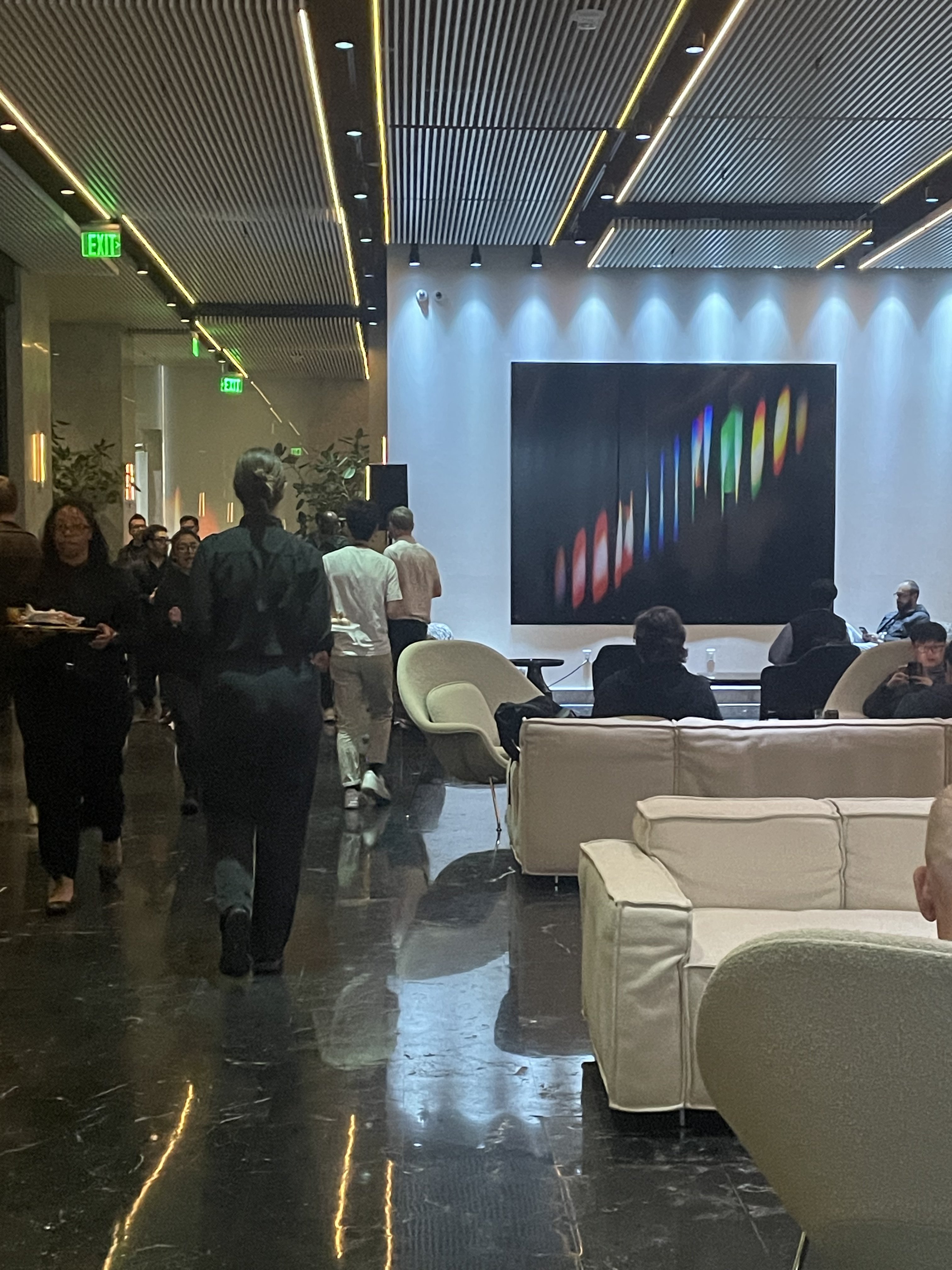
Three Strategic Signals From the Two Rooms
Three signals were consistent across both nights. These are the patterns I am taking into Fortune 500 client conversations this quarter.
Google is betting the company on agentic, not chat. Omni plus Antigravity plus Managed Agents is a coherent agent-first strategy, not a model release. This is structurally different from OpenAI's chat-and-API motion. For enterprise transformation leaders, this matters — Google now has the platform depth to be a credible primary vendor for an agent-first transformation program, not just a model vendor inside a multi-vendor stack.
DeepMind is now Google's product team, not Google's research lab. Three years ago DeepMind shipped papers. Today DeepMind shipped the keynote. Varun Mohan demoed Antigravity building an operating system live on stage. Multiple DeepMind staffers ran the product booths Tuesday night and the debrief Friday night. The org chart shift is the strategy shift. Anyone evaluating Google Cloud's enterprise AI roadmap should re-weight DeepMind heavily in the credibility math.
Cerebral Valley is the new accelerator class. Not Y Combinator. Not a16z. Not Sequoia Scout. A community of model labs plus curated builders plus curated capital — running a quarterly hackathon circuit that is rapidly becoming the highest-signal builder events of the year. The Paris July events (RAISE Summit July 4-5, Machina Hackathon July 6) confirm this is a global motion. For founders and corporate development teams trying to get inside the next launch cycle of a frontier model, the Cerebral Valley calendar is now table stakes.
What Comes Next
Three product cycles to watch over the next two quarters. Antigravity 2.5 — the multi-agent orchestration is shipping fast enough that another release inside calendar 2026 is realistic; the next version will likely formalize agent-to-agent communication primitives that did not make 2.0. Omni 2 — DeepMind's roadmap on world models is more ambitious than what shipped on Monday; the interactive use cases (robotics simulation, real-time physics) are a bigger story than video generation. The Build with Gemini XPRIZE — Google's $2 million, 90-day hackathon competition announced on the I/O stage closes in Q3, and the winning projects will define what a "production agentic business" looks like at Google scale.
For C-Suite Leaders Reading This
If you have not already initiated a Google Cloud relationship conversation around the I/O 2026 stack, the next thirty days are the moment. Google's GTM team is in full follow-up motion right now — I received outreach from Google Cloud titled "From Next '26 to Production: Let's connect" within forty-eight hours of returning from San Francisco. The combination of Managed Agents (commodity), Antigravity 2.0 (differentiation), and Omni (long bet) is the exact mix that warrants a structured Q3 evaluation against your existing Anthropic and OpenAI footprints.
Part 1 of this series covers the Cerebral Valley × Google I/O Hackathon and features 3rd-place winner Yves Hughes. Read Part 1 →. If you are mapping a Q3 AI transformation roadmap and want a partner-tier read on Google's new stack — and where Anthropic and OpenAI fit alongside it — explore our AI transformation services or get in touch.
Frequently Asked Questions
What strategic signals came from Google I/O 2026?
Three strategic signals emerged from Google I/O 2026 after-hours events: (1) Google is betting the company on agentic AI, not chat — Omni plus Antigravity plus Managed Agents is a coherent agent-first strategy; (2) DeepMind is now Google's product team, not its research lab — DeepMind staffers ran the keynote demos and product booths; (3) Cerebral Valley is emerging as the new accelerator class, running a quarterly global hackathon circuit that is becoming the highest-signal builder event series in AI.
What is Google DeepMind's product strategy after I/O 2026?
Google DeepMind's I/O 2026 strategy centers on a coherent agent stack: Gemini Omni for world modeling and multimodal generation, Antigravity 2.0 for multi-agent orchestration and autonomous coding, Managed Agents for the production runtime, and Gemini 3.5 Flash as the engine underneath all of it. Three product cycles to watch: Antigravity 2.5, Omni 2, and the Build with Gemini XPRIZE ($2M, 90-day competition closing Q3 2026).
How does Antigravity 2.0 change enterprise AI?
Antigravity 2.0 changes enterprise AI by shipping the harness layer that historically separated platform companies from product companies. Its manager-and-specialist multi-agent pattern replaces single-agent loops, and combined with Managed Agents, it collapses six weeks of custom platform engineering into a single API call. Enterprise architects should re-scope from 'pilot one AI assistant' to 'pilot a team of agents.'
Want to scope an engagement around this?