
The 36-point gap in advertising is a workflow problem.
81% of marketers want one AI partner across creative, media, commerce and earned. 45% have one. What closes the gap is not another tool per channel. It is a managed agent that carries the brief, the journey map, the measurement plan and the segmentation across every channel. Enso Labs builds that harness: the strategic conduit between your channels, reporting every reallocated dollar in media dollars, channels, days and leads.
The signal
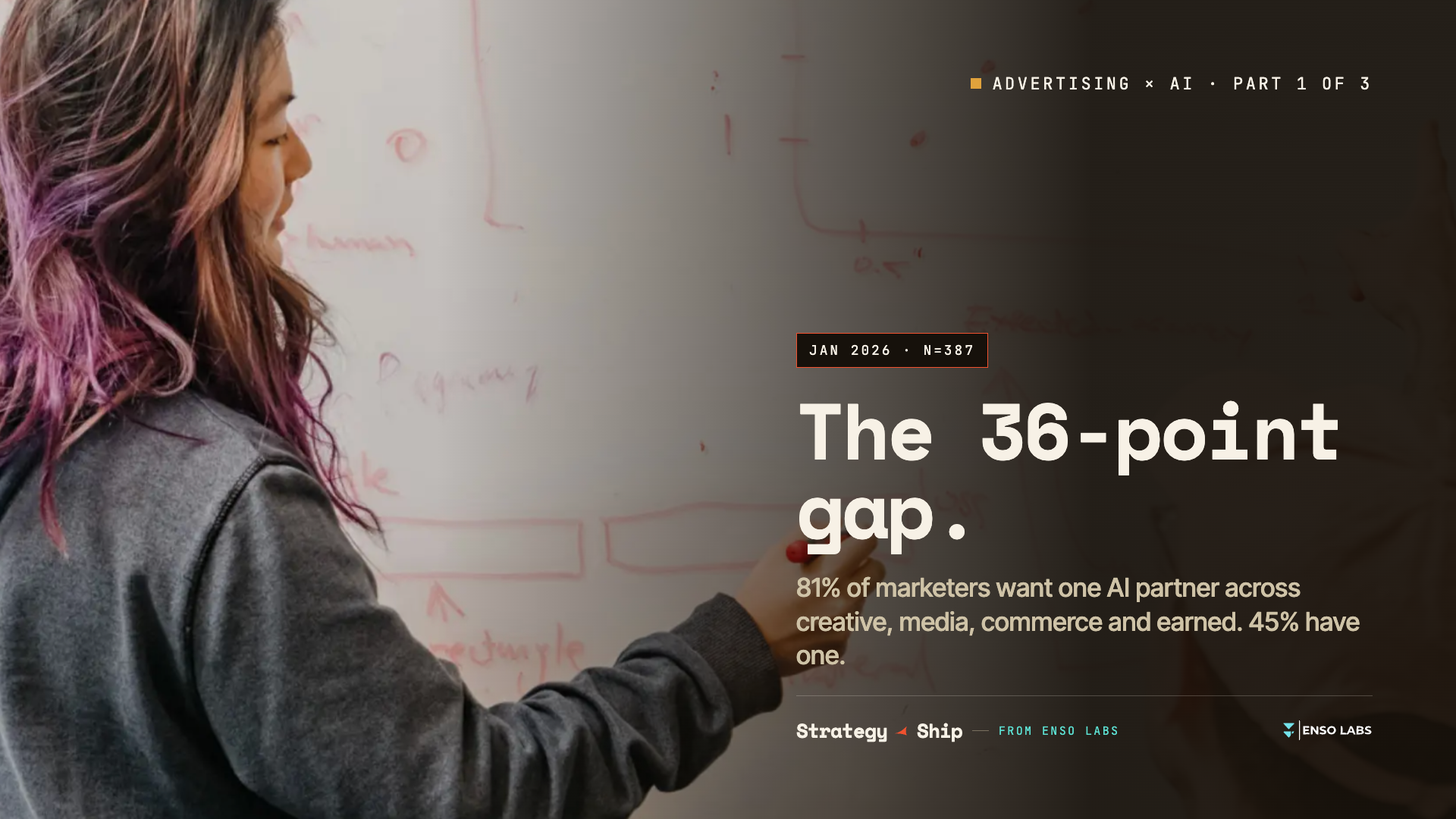
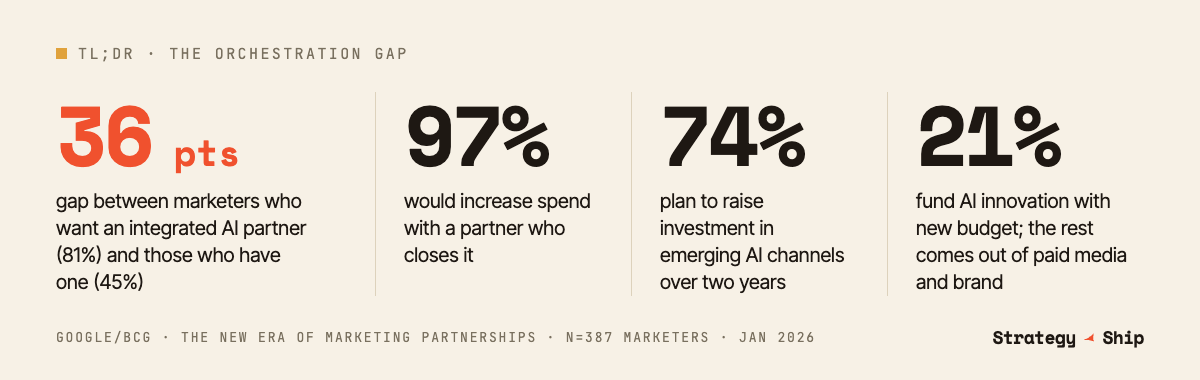
81% of marketers want one partner that orchestrates creative, media, commerce and earned. 45% have one.
That 36-point gap is from Google and BCG's January 2026 survey of 387 marketers, published by Paul Limbrey in June. It is the largest open opportunity in advertising, and the diagnosis in the piece is the right one: the unit of transformation is the workflow.
Why it matters
Why the gap exists. Procurement still issues RFPs by channel, so fragmentation is bought before any work starts. Agency ground teams stay channel specialists. And "AI transformation" has mostly meant each silo adopting its own tool. Faster silos, not fewer.
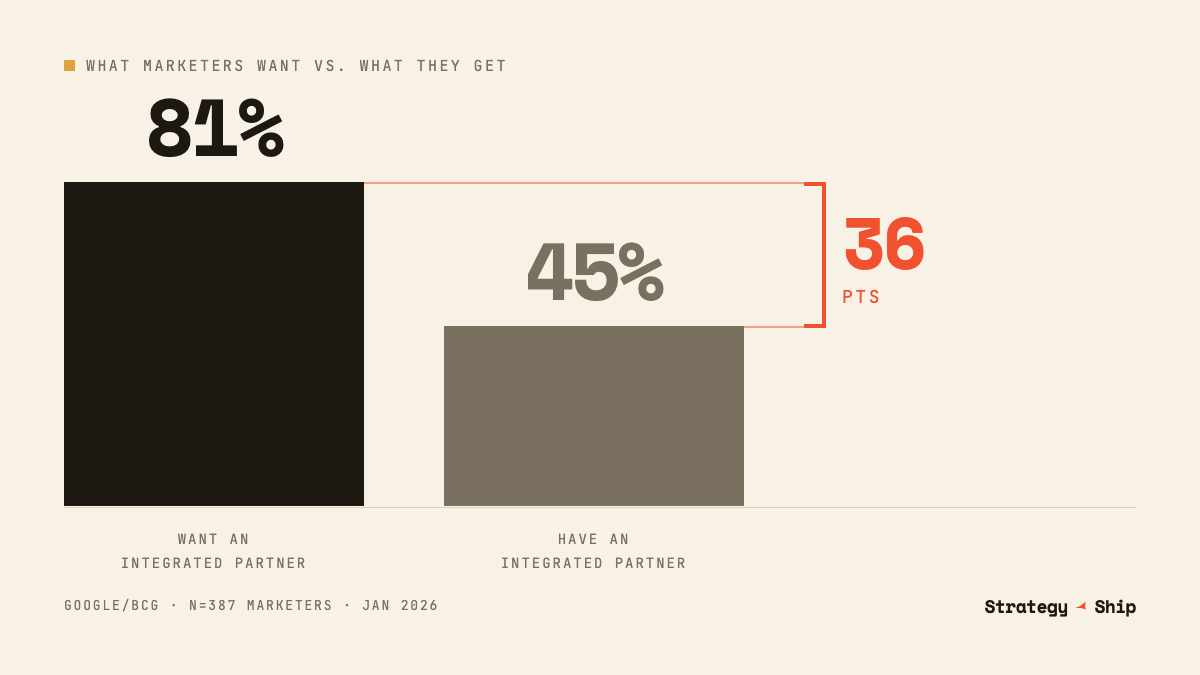
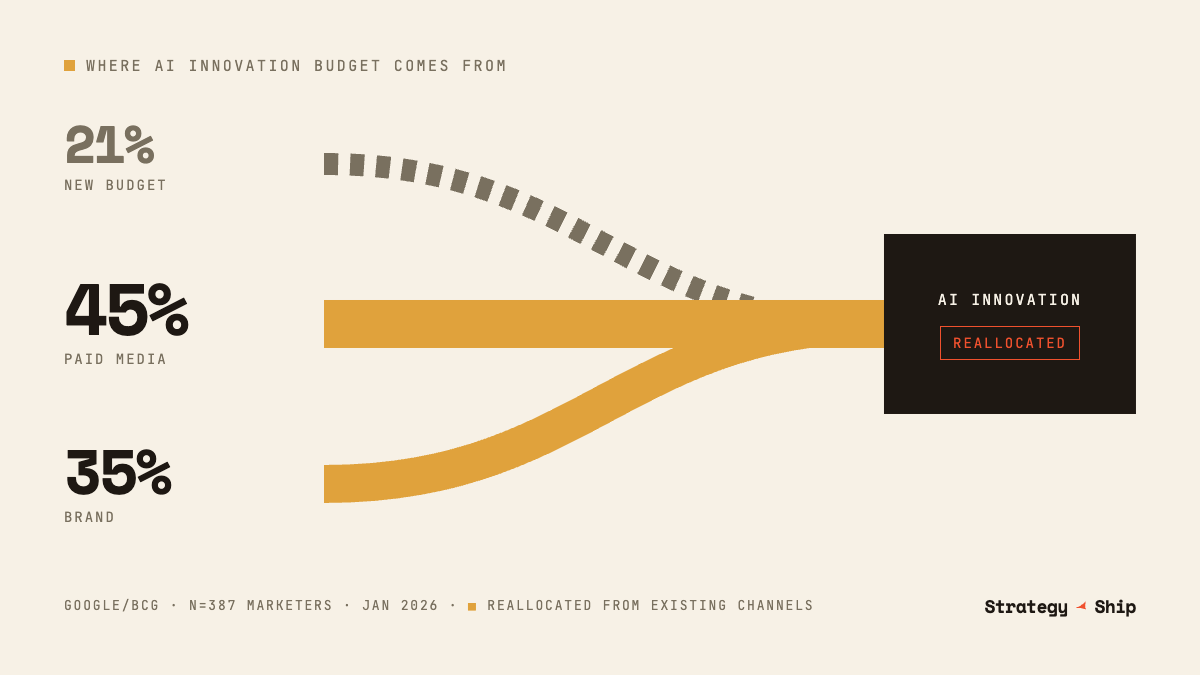
Where the money is. Only 21% of marketers fund AI innovation with new budget. 45% pull it from paid media, 35% from brand. The buyer is not adding spend — they are moving it. 97% say they would increase spend with a partner who can show where a reallocated dollar went and what it returned.
The Enso take
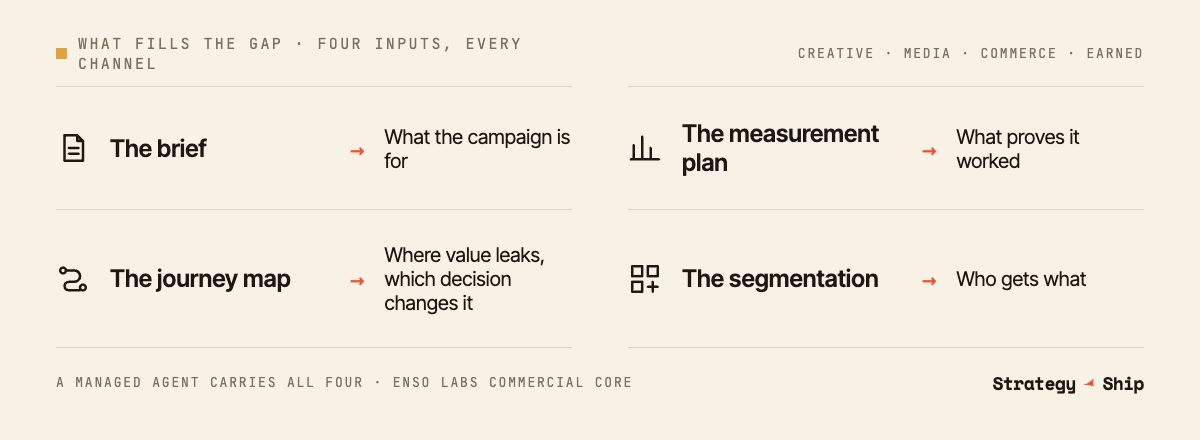
What "integrated" means in production. One system carries four inputs across every channel: the brief, the journey map, the measurement plan, the segmentation. Channel specialists never write these down because they live between channels. A managed agent does — that is the orchestration layer the survey is describing. It doesn't replace the creative or media teams; it carries their shared inputs and reports the reallocation in media dollars, channels, days and leads.
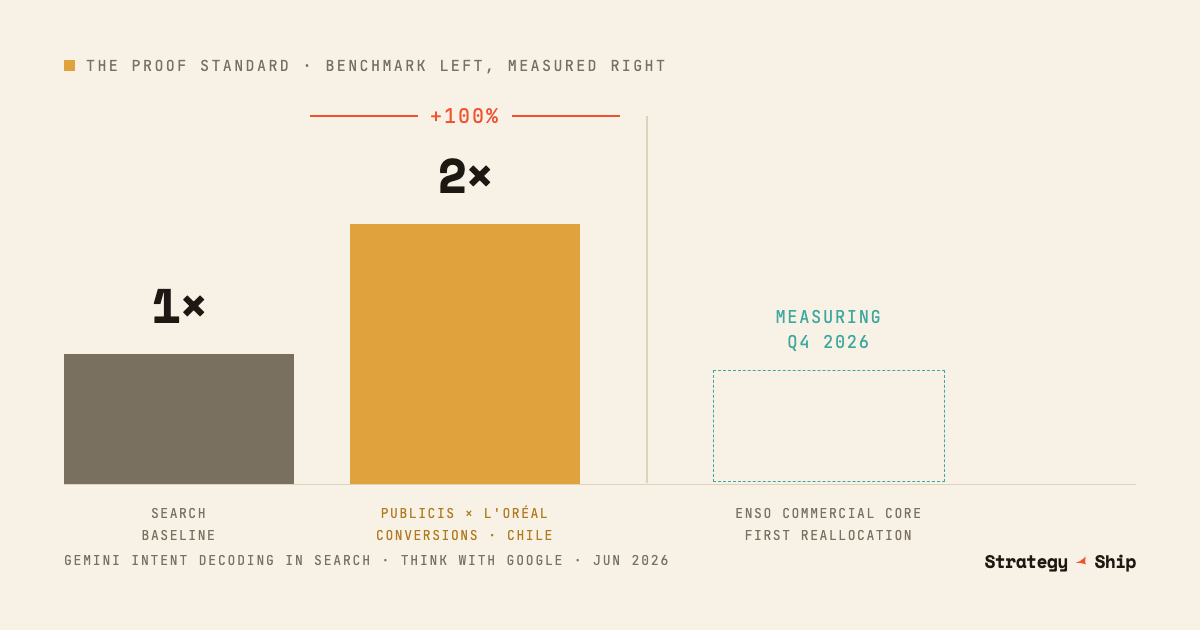
The proof standard. Google's own example: Publicis for L'Oréal, Gemini-powered intent decoding inside search, 2× conversions, piloted in Chile and scaling globally. A measured lift in a live account, attributable to a workflow change. That is the bar we hold Enso Labs' Commercial Core — our managed-agent suite for advertising — to: benchmark on the left, the client's measured number on the right.
What to do about it
At the next agency review, ask every partner: which of my four inputs do you hold, and which channels does it travel across? One channel — you have a specialist. All of them — you have an orchestrator, and that is where 97% of your peers say the next dollar goes.
1. Who holds the brief once it leaves the kickoff deck?
2. Where does the journey map live, and which channel can see it?
3. What is the measurement plan, and who enforces it mid-flight?
4. Which segmentation does media use — and is it the same one creative uses?
One channel per answer means you have specialists. The same answer four times means you have an orchestrator.
Enso Labs builds managed AI agents for advertising and data analytics teams, from New York. If you want the four inputs carried across your channels, talk to us or see what we ship.
Part 2 (Sep 15): the reallocation ledger — how we report a moved dollar in media dollars, channels, days and leads.
Powered by Enso Labs
Frequently Asked Questions
What is the 36-point gap?
The difference between the 81% of marketers who want one integrated AI partner across creative, media, commerce and earned, and the 45% who have one (Google/BCG, N=387, Jan 2026).
Why does the gap persist if every agency has adopted AI?
Because AI has been adopted silo by silo. Procurement buys by channel, ground teams stay channel specialists, and each silo picks its own tool. Workflows have not changed.
What does a managed agent carry across channels?
Four shared inputs: the brief, the journey map, the measurement plan and the segmentation. It reports reallocation in media dollars, channels, days and leads.
Where is the AI budget coming from?
Only 21% of marketers fund AI innovation with new budget; 45% reallocate from paid media and 35% from brand.
What is the proof standard for an integrated AI partner?
A measured lift in a live account attributable to a workflow change, such as Publicis × L'Oréal's 2× conversions from Gemini intent decoding in search.
Want to scope an engagement around this?